
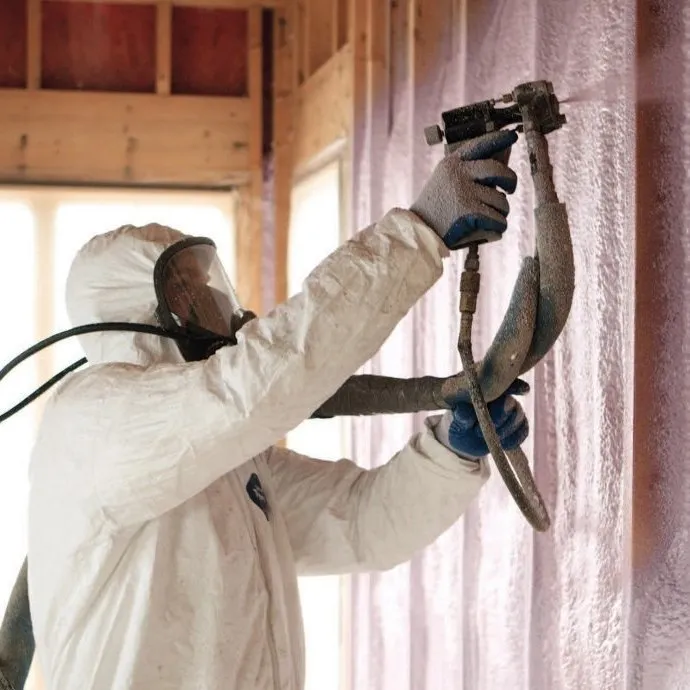
Why Spray Foam?
Spray foam is not just insulation in a cavity. It is also a way to help control air movement when the material fits the building assembly.
Insulation is part of a bigger system
Your roof, walls, attic, basement, crawl space, windows, doors and insulation all influence how the building handles heat, cold, humidity and air movement.
Traditional insulation primarily slows heat transfer. Spray foam can also help control unwanted air movement where it is properly applied. That distinction is useful, but it does not mean every building should automatically receive foam.
For St. Louis homes, the first question is often the assembly: older brick walls, attic retrofits, basement-adjacent areas and additions can each need a different insulation discussion.
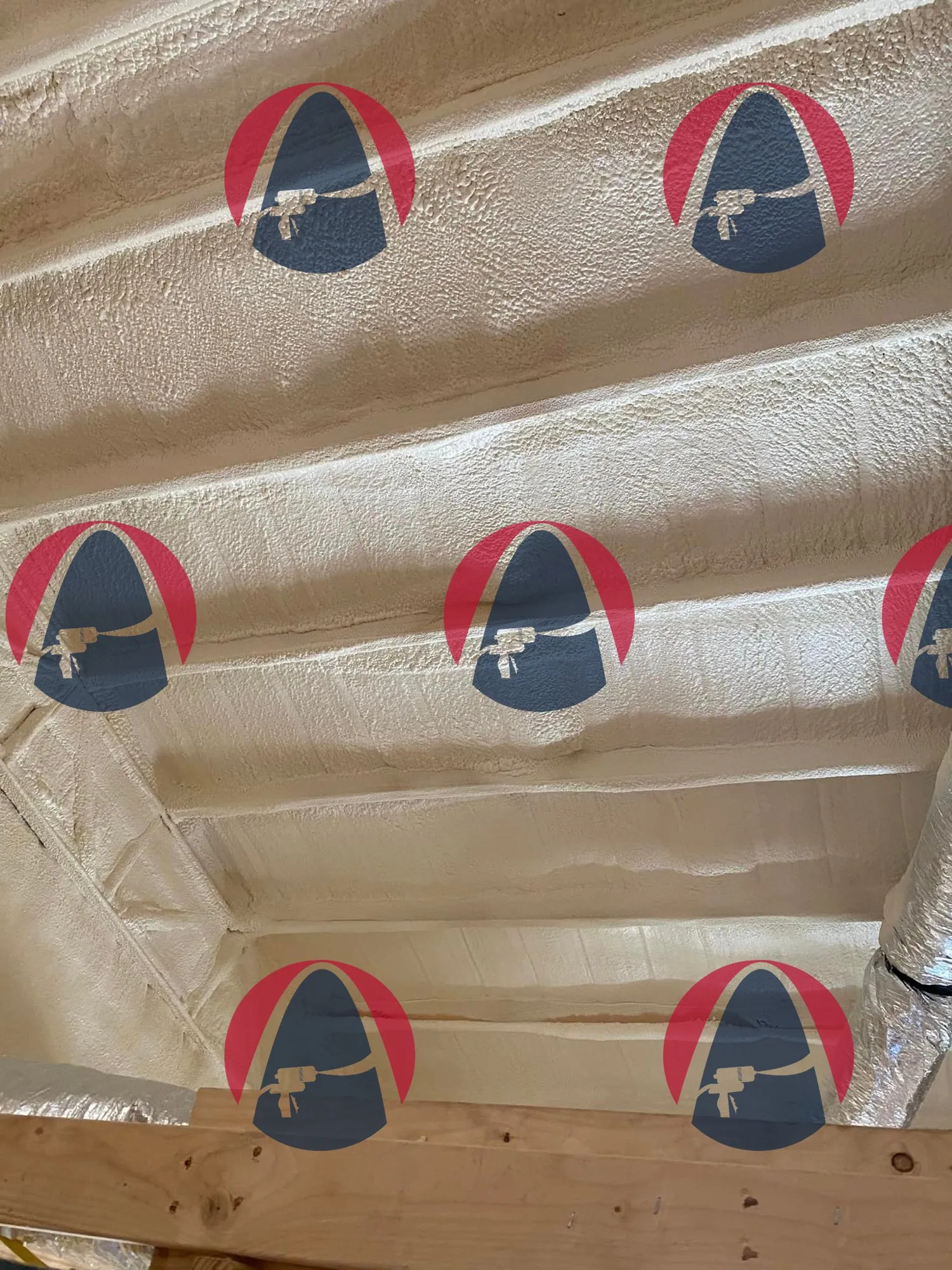
How does spray foam compare?
Spray Foam
- Insulation plus air-sealing capability
- Expands to conform to irregular areas
- Professional installation required
- Cost depends on product, thickness and access
Fiberglass
- Widely used in batts or blown formats
- Primarily thermal insulation
- Can perform well when properly installed
- Air sealing may require separate work
Cellulose
- Common in attics and retrofits
- Can fill irregular spaces
- Primarily thermal insulation
- Air and moisture strategy depends on assembly
The right choice depends on the building, the assembly and the project goal.
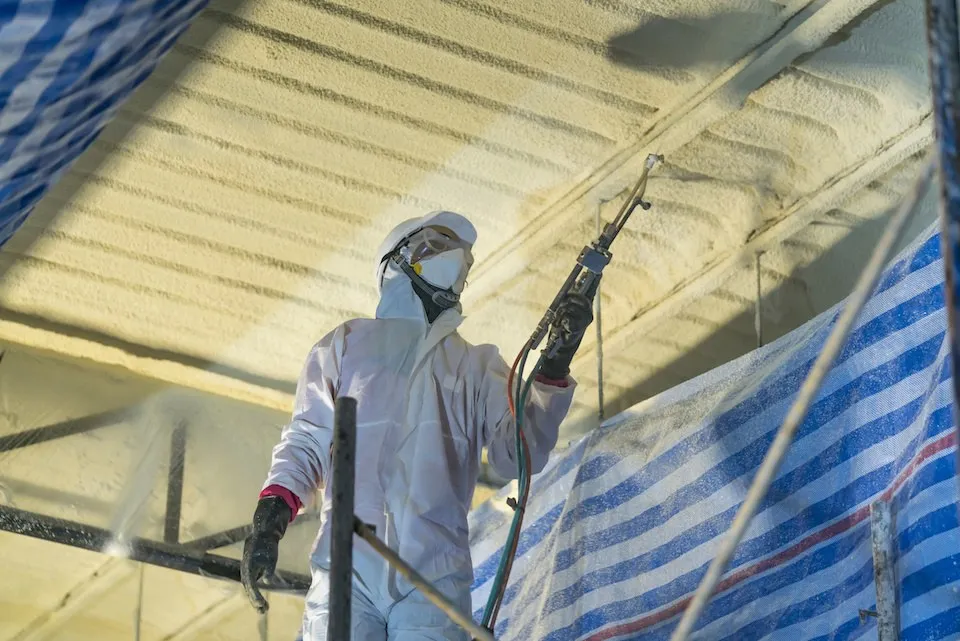
Foam type changes the conversation
Low-density open-cell foam is softer and more flexible, while closed-cell foam is denser and commonly discussed for residential attics, crawl spaces, commercial projects and metal buildings.
Closed-cell foam may be part of a moisture or durability conversation, but it still needs to be matched to the substrate, vapor strategy, local code and project area. Open-cell foam may be useful in some interior assemblies, but it is not a universal answer either.
Compare Closed-Cell InsulationHumidity, cold and older structures matter
A St. Louis insulation project has to consider both cooling and heating seasons. Humid summer air, winter cold and basement or crawl-space conditions can all affect the best plan.
Older brick homes and additions can have mixed assemblies. Before choosing foam, a contractor should understand where air is moving, what material already exists and how moisture is managed.
Tell us about the property and let the estimate identify the right next step.
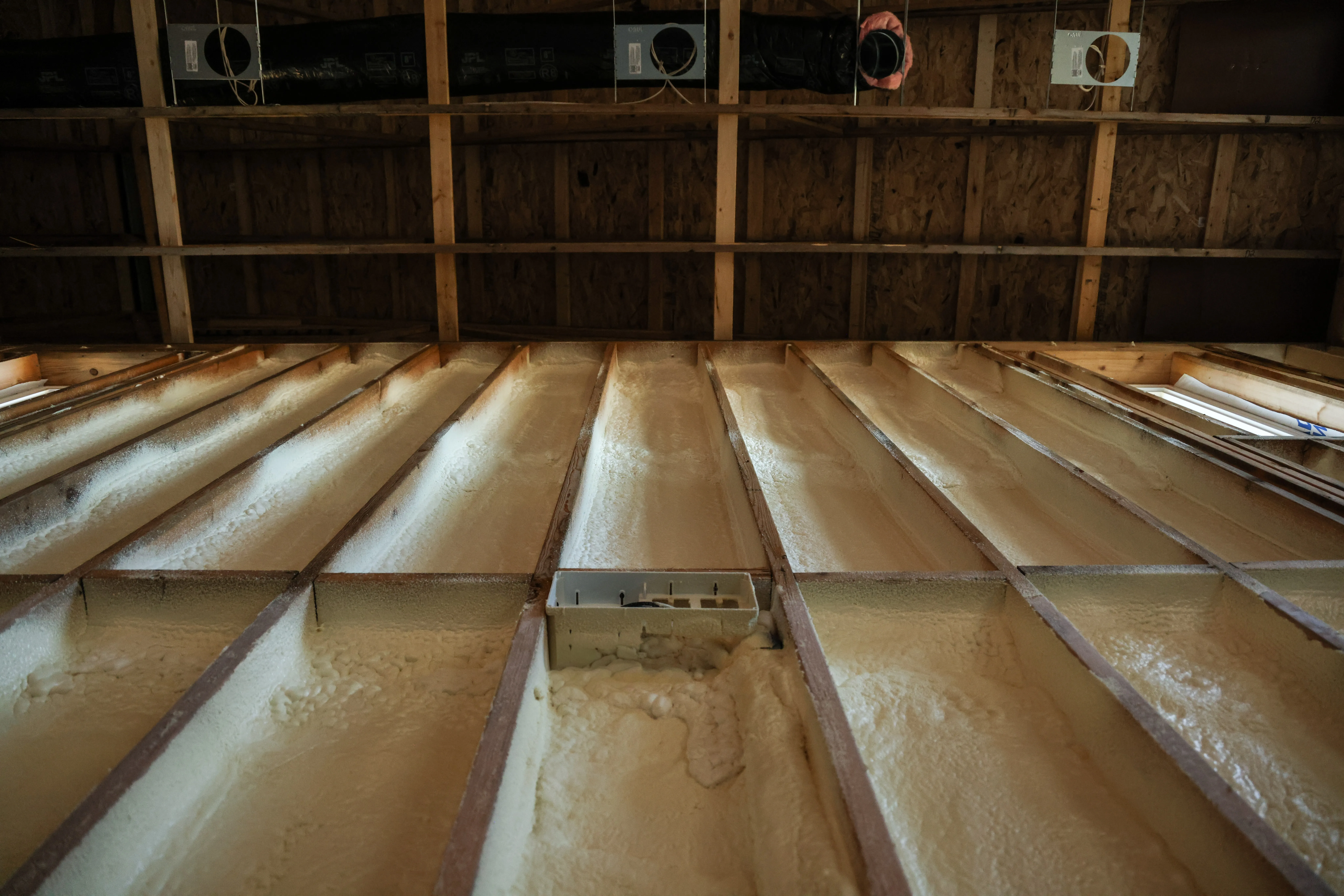
Questions people ask before choosing spray foam
Is spray foam always better than fiberglass or cellulose?
No. Spray foam can add air-sealing value, but fiberglass and cellulose can still make sense in the right assembly. The choice depends on the building, access, moisture strategy and project goal.
Does spray foam have an odor during installation?
There can be odor during and shortly after application. Re-entry guidance can vary by product and manufacturer, so the specific product guidance should be followed.
Is open-cell or closed-cell foam better?
Neither is universally better. Closed-cell foam is denser. Open-cell foam is lighter and more flexible. The right material depends on where it is installed and what the assembly needs.
Can spray foam be installed in an existing home?
Yes. Retrofit work needs a careful look at access, existing insulation, ventilation and moisture conditions.
Why does St. Louis climate matter?
St. Louis combines humid summers, cold winters and many older homes with basements and masonry. Those conditions make air movement and moisture strategy important to discuss before installation.
Match the insulation discussion to the project
You do not have to diagnose the building alone
Tell us what you are trying to improve and where the issue shows up.